
Selecting the right laundry detergent is no longer just about “getting clothes clean.” Modern consumers care about fabric care, skin safety, environmental impact, and cost-effectiveness. With today’s wide range of products—washing powder, liquid detergent, laundry bar soap, and specialized ingredients—understanding the differences helps you make smarter choices for your household or your brand.
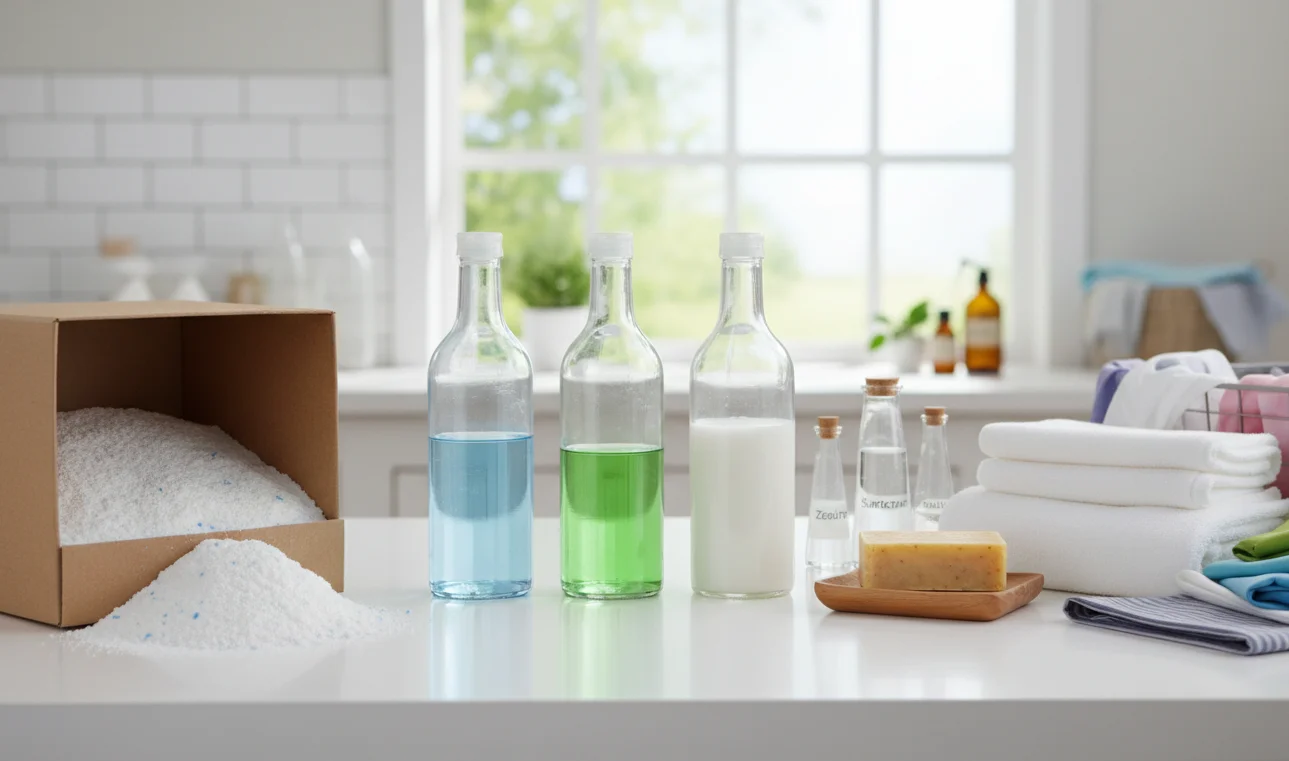
1. Types of Laundry Detergents and Their Advantages
1.1 Washing Powder (Detergent Powder)
Best for:
- Regular household washing
- Washing in hard water areas
- High-volume and cost‑sensitive markets
Advantages:
- Cost-effective: Powder is usually cheaper per wash and ideal for bulk production and export.
- Stable formula: Ingredients remain effective over long storage and long-distance shipping—important for international markets like the Middle East, Africa, South America, and Southeast Asia.
- Strong cleaning power: Particularly effective for removing mud, dust, and general outdoor dirt.
Tips when choosing:
- Look for high active content for better cleaning efficiency.
- Choose powders with anti-redeposition agents to prevent dirt from reattaching to clothes.
- For sensitive users, select low-foam, phosphate-free, or enzyme-optimized formulas.
1.2 Liquid Detergent
Best for:
- Front-loading and high-efficiency washing machines
- Color garments and delicate fabrics
- Cold water washing
Advantages:
- Fast dissolving: No residue on dark clothes or quick wash cycles.
- Color care: Often softer on fabrics and colors compared to some traditional powders.
- Convenient dosing: Easy to measure and pour; works well in automatic dispensers.
Tips when choosing:
- For delicate fabrics, choose mild pH formulas and no harsh bleaching agents.
- For efficiency, pick concentrated liquids—less packaging, easier logistics.
- For sensitive skin, avoid excessive fragrance and dyes.
1.3 Laundry Bar Soap & Soap Powder
Best for:
- Hand-washing clothes
- Local markets where bar formats are preferred
- Pre-treating collars, cuffs, and stubborn stains
Advantages:
- Direct scrubbing: Excellent for spot cleaning.
- Low equipment requirement: Ideal in regions with limited access to washing machines.
- Versatile: Often used for both clothes and general household washing.
Tips when choosing:
- Select gentle formulas to avoid skin irritation during hand-washing.
- Look for easy-rinsing bars to reduce water use and time.
- For children’s clothes, opt for mild, low-allergen soap bars.
1.4 Fabric Softener
Best for:
- Maintaining softness of towels, bed linens, and everyday clothing
- Reducing static and wrinkling
Advantages:
- Soft touch: Improves comfort, especially for cotton and blended fabrics.
- Less static: Clothing is easier to iron and more pleasant to wear.
- Fragrance retention: Long-lasting fresh scent on fabrics.
Tips when choosing:
- For sensitive skin, choose hypoallergenic, lightly scented products.
- For commercial users (hotels, laundries), look for high-concentration softeners to reduce cost per wash.
1.5 Hand Soap & Dishwashing Liquid: Protecting Skin While Cleaning
While not directly used in laundry, hand soap and dishwashing liquid are closely related to home and hygiene care.
Hand Soap:
- Choose pH-balanced formulas that do not strip natural skin oils.
- For frequent washing (e.g., in households, hotels, restaurants), use moisturizing formulas with mild surfactants.
Dishwashing Liquid:
- Select high-degreasing, but low-irritation formulas if you wash dishes by hand often.
- Look for dermatologically tested products for safer daily use.
1.6 Specialized Products: Disinfectant, Rinse Aid, Dishwasher Salt & Tablets
With hygiene awareness rising globally, specialized products are increasingly important:
Disinfectant Liquid:
- Ideal for medical textiles, baby clothes, and household items that require extra hygiene.
- Choose products with proven testing reports that meet recognized quality standards.
Dishwasher Salt & Rinse Aid:
- Dishwasher salt softens water, protecting machines and improving cleaning efficiency.
- Rinse aid helps water sheet off dishes, reducing spots and speeding drying.
Dishwasher Tablets:
- Convenient, pre-measured doses that combine detergent, enzymes, and sometimes salt and rinse aid.
- Good choice for busy households and hospitality customers.
2. How to Choose Skin-Friendly Detergents
Many consumers worry about detergents irritating the skin, especially for children, elderly people, or those with allergies. When selecting a skin-friendly detergent:
- Check if it is dermatologically tested Products backed by testing reports are more reliable for sensitive users.
- Avoid excessive fragrance and coloring Strong perfumes and bright colors can increase the risk of irritation.
- Prefer mild surfactants and balanced pH This reduces the chance of dryness and itching, especially for hand-washed garments.
- Rinse thoroughly Incomplete rinsing can leave residues that irritate skin.
- Choose products with clear ingredient information Transparent labeling helps identify low-irritation formulas.
A factory with a professional R&D team and full testing capabilities can design customized mild formulas for different markets and customer needs.
3. Key Considerations for Brands and Importers
3.1 Production Capacity & Stability
- A factory with large scale (e.g., 74,000 sqm) and daily output of 15 containers can support growing orders and seasonal peaks.
- Strong capacity ensures steady supply to more than 80 countries and regions and reduces risk of stockouts.
3.2 Professional R&D and Complete Product Line
- Access to a professional research and development team allows:
- Custom formulas: high foam, low foam, high-active, eco-friendly, etc.
- Market-specific products: for Middle East, Africa, South America, Southeast Asia, and the US.
- A complete product line simplifies supply chains.
3.3 OEM/ODM Flexibility
- Custom packaging: bags, boxes, bottles, bar wrappers tailored to your market.
- Custom formulas: fragrance, color, foam level, concentration, and ingredients.
- Processing with customer’s materials:
- Package processing
- Raw materials processing
- Component processing
- Sample development and refinement
3.4 Quality Assurance and Compliance
- Look for manufacturers whose products have complete testing reports and meet international quality requirements.
- Consistent quality helps maintain:
- Consumer trust
- Stable performance
- Long-term relationships
4. Balancing Quality, Price, and Service
- Good Quality
- Competitive Price
- Reliable Service
Factories that adhere to principles such as honesty, practicality, and innovation and offer after-sales support are better partners for building sustainable detergent brands.
5. Practical Checklist: How to Choose the Right Detergent Product
For households:
- Need strong stain removal? → Choose high-active washing powder or concentrated liquid.
- Sensitive skin at home? → Look for mild, low-fragrance formulas with test reports.
- Mostly hand-wash? → Use gentle bar soap or mild powder that rinses easily.
- Want soft, comfortable clothes? → Combine detergent with fabric softener.
For brand owners/importers:
- Define your target market: economy, mid-range, or premium.
- Choose product types based on local habits (powder vs. liquid vs. bar).
- Work with a factory that offers:
- Strong production capacity
- Full product range
- Professional R&D
- OEM/ODM services
- Verified testing reports
Conclusion
Choosing the right laundry detergent and related hygiene products is about more than cleaning; it’s about protecting fabrics, caring for skin, meeting local preferences, and controlling cost. With a reliable, large-scale manufacturer that combines strong R&D, full product lines, OEM flexibility, and proven quality testing, both households and international buyers can enjoy safe, effective, and competitive detergent solutions in markets around the world.